Our Story
Migration as a means to survive
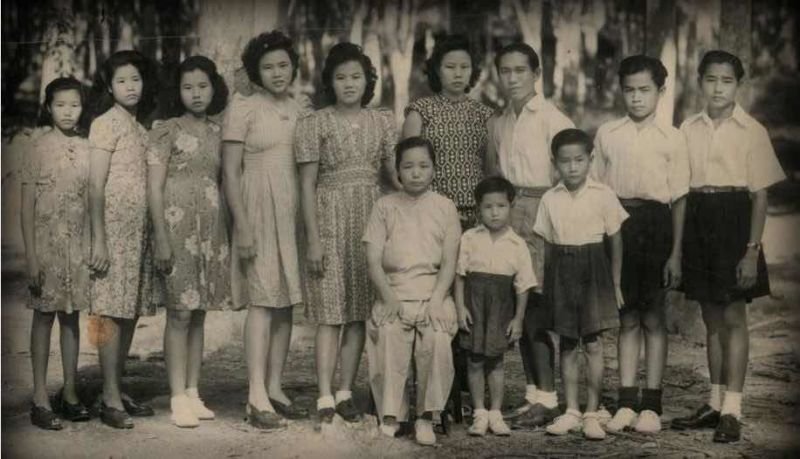
Pictured: AYER TAWAR, 1949. My Grandfather (1st on the right), age 17, and the rest of his siblings, with my Great-Grandmother sat in the middle. She had her feet bound as a child.
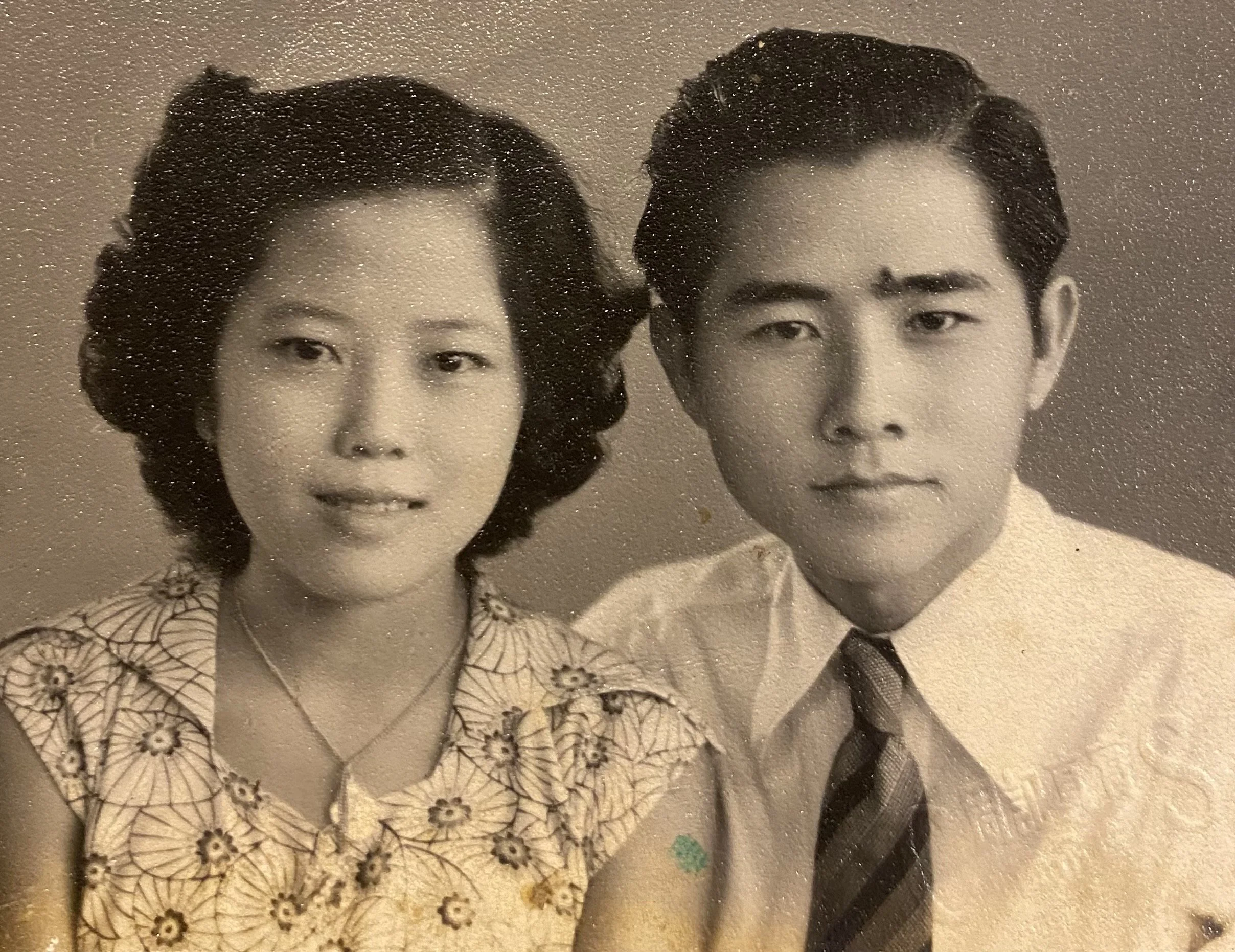
Pictured: AYER TAWAR, 1953. My Grandparents’ engagement photo.
Similar to many Chinese diaspora in the early 1900s, my great-grandparents emigrated from Southern China out of necessity - packing up a cloth bag full of dreams and hopes for a better future to 南洋 (South East Asia).
My great-grandfather’s boat docked on the shores of Northern Malaysia (then Malaya), where my grandfather and his 9 other siblings would be born. This was Ayer Tawar, Perak.
1910s-1920s
1960s- 1970s
My 嬤嬤 (grandma) was just shy of three years old when the Japanese invaded in WWII. As a consequence, her family fled East Malaya where she was born. Her father embarked on a treacherous journey back to China to seek work, but was killed along the way. She was 4 when she last saw her dad.
My maternal Great-grandmother took on work as a housemaid in a little village in Perak. As a result, my grandparents grew up as neighbours in Ayer Tawar. The town mainly consisted of economic migrants from Fuzhou, China. As second generation immigrants, they grew up speaking Hokchew, a Chinese dialect indigenous to Fuzhou.
嬤嬤(grandma) and 公公(grandpa) worked as rubber tappers under the British Colony. Grandma had a total of 9 kids over the course of 18 years.
In search of hope, and a better future —
1980s- 1990s
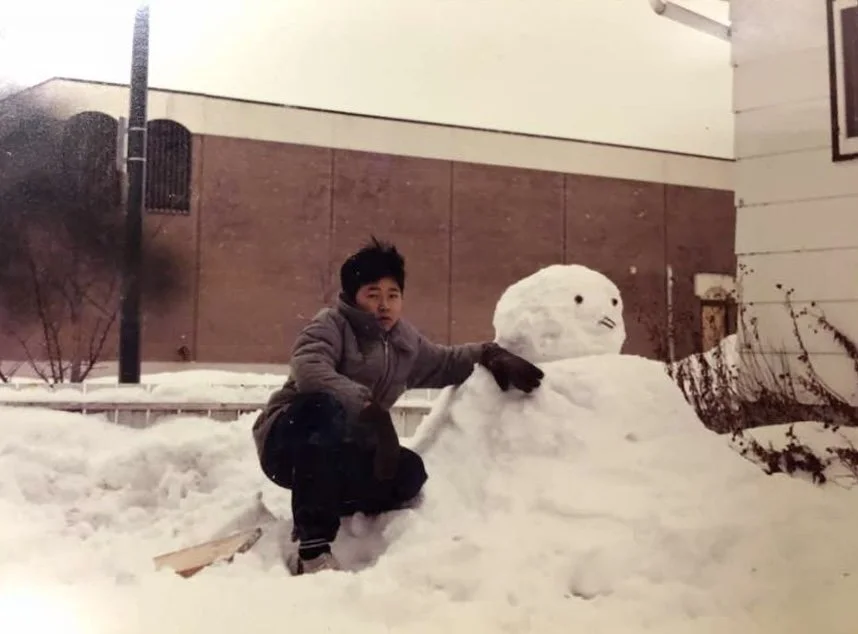
Pictured: MANITOBA, Canada, 1989? My Father and a snowman he built.
Combining years of rubber-tapping, factory work and being a blacksmith, my Grandparents managed to scrape and save to send their eldest child to study abroad in the early 80s. A few years later, applying as dependants, my father, the youngest of 9, and his parents flew out to Winnipeg, Canada.
12 years old at the time, my father went from the humidity of north Malaysia, not speaking a lick of English and having never had boarded a flight in his life, to -40°C Canadian winters.
Migration, in this instance, had taken on a different form. It was no longer to escape communism or to lift the family out of poverty, but instead, a search for social mobility. Education has always been used as a yardstick to measure future potential success.
Assimilation, however, was not an easy feat. Soy sauce spaghetti noodles for lunch to avoid spending money on school meals, my dad, young and stumbling through thick piles of snow. As he recounts this, his tone is reminiscent. ‘Grandma has always been the source of warmth through indescribable hardships’, he often says.
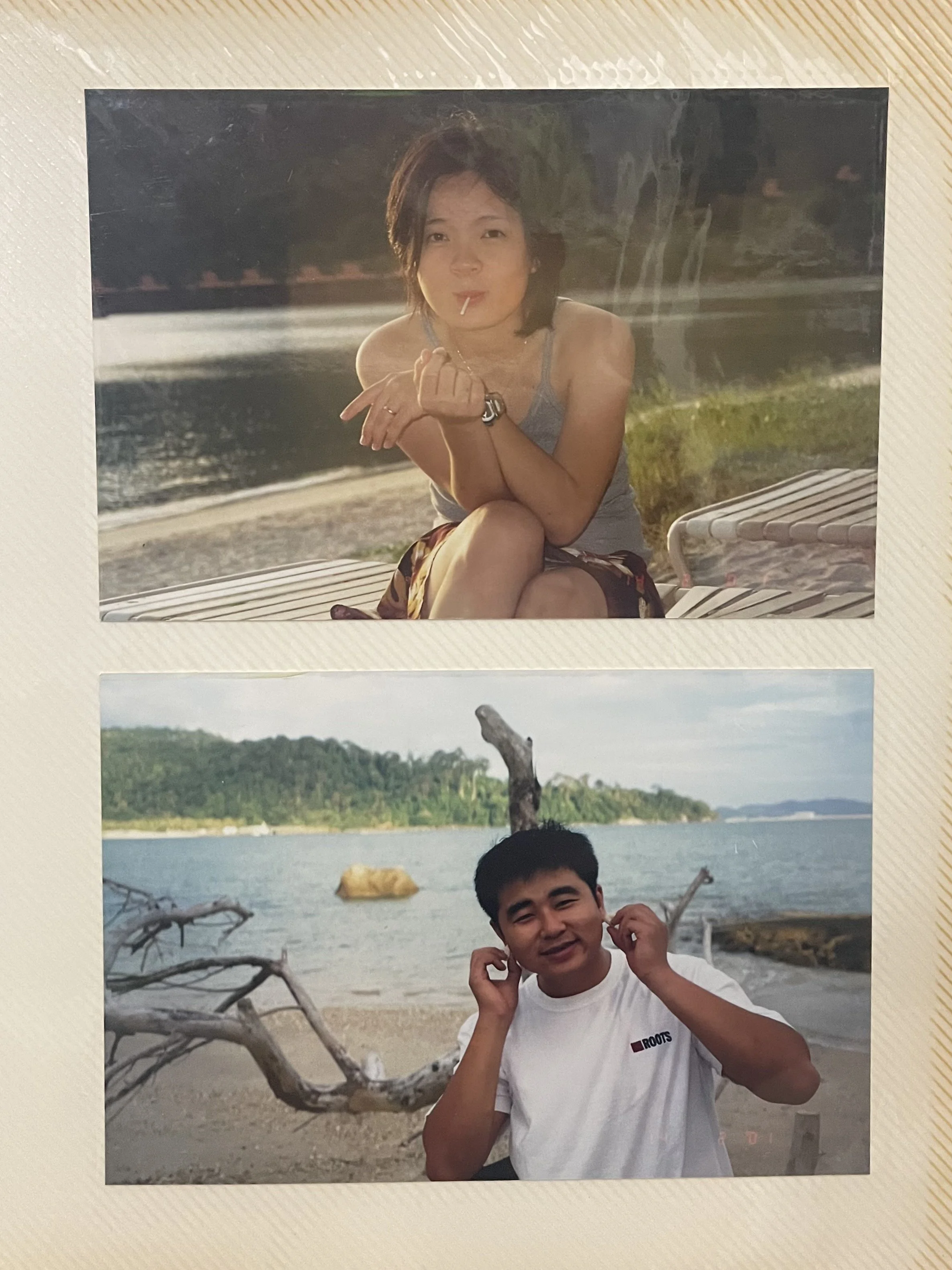
My parents on a trip when they had just begun dating.
It was 1998. My dad had just moved home after just over a decade in Canada - having only visited Malaysia once since his departure when he was 11.
Thick in a northern American accent, my dad embarked on a journey to build the family business that was in its budding stages. I asked once if he found it hard to fit in - to which he said: ‘Of course, but you find a way to fit in again. Home is home’.
My mother on the other hand, was about to have her life flipped upside down. May 1998, a phrase harrowing enough to make most Indonesians crawl and hurry everyone in the room into a dull hush.
Riots had broken out. The slaughtering had begun. My grandad, having prepared for this day his whole life, immediately evacuated his entire family from their home in West Jakarta overnight.
In a desperate plea, my grandmother had reached out to her brother, who was based in Hong Kong at the time. He had worked with my uncle (my father’s brother), and asked for a favour to help my mum settle into her new city: KL. The person assigned for duty? My father.
1990s- 2000s
My young parents had their fates cross in the most unordinary manner, in my opinion. A man, ready to harvest the crop from the seeds sown by his parents a couple decades prior; a woman, uprooted and finding herself on fresh soil. Both 3rd generation immigrants in South East Asia, of Chinese roots. The unusual fate of diaspora I continue to witness in my own life, connecting with Chinese descendants who were born all over the world, bonding over our asian parents and asian food.
My parents married 3 years later. Together they have 3 girls.
My siblings are my best friends and lifeblood. I often think that without them, very little could be said about me. They honour me with the ability to just be, without need. People often describe us to have a secret language - a mix of Mandarin, Fuchow, Malay, English and a whole lot of gibberish. An amalgamation of sisterhood and history, if I do say so myself.
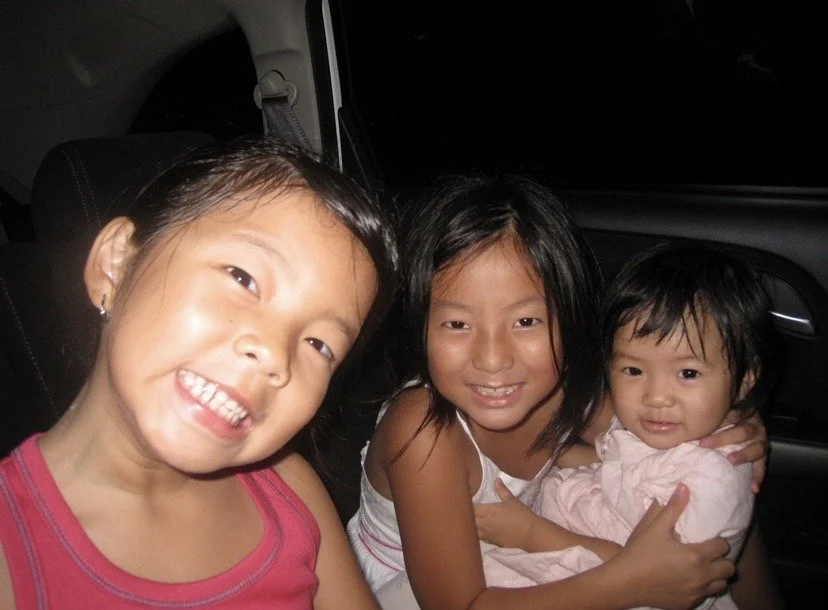
Pictured: KUALA LUMPUR, Malaysia, 2010. Thalia (8), Chloe (9), Meg (2)
Who We Are
The House was born from the quiet courage of migration—the love that asks us to leave what is familiar, the sacrifice of beginning again, and the hope of creating a more abundant future for those who come after us. Each piece embodies a philosophy drawn from this journey: resilience, transformation, openness and grace in the face of the unknown.
Jewellery that inspires and that acts as an extension of one’s identity. Whether it be through borrowing the strength of those that came before us, or simply aspiring to rise to our higher selves.
Become a founding member
Gain access to be one of the first to own our pieces.